Surety Bonds

Bonding Capacity Built for the Work Ahead

Your financials tell part of the story. How you run the business tells the rest. We work on both, so your capacity grows ahead of your pipeline.

About Surety Bonds

For a growing contractor, bonding is either a roadblock or a key to unlock bigger opportunities. We work with surety partners who will dig into your business with us and build a path to higher limits and better terms before you need them. So when a bid is due, you get bonds back fast.

Bid Bonds
Payment Bonds
Performance Bonds
Maintenance Bonds
License & Permit Bonds

What Sureties Actually Underwrite

Other Services

  • This field is for validation purposes and should be left unchanged.

Growth Isn’t a Decision You Make at Bid Time

Every contractor in your market is bidding against the same conditions. The bigger job, the longer schedule, the owner worth having as a client. What separates the ones who take that work from the ones who watch it go isn’t nerve or ambition. It’s whether the capacity was already there when the chance showed up.

Bonding capacity isn’t granted at bid time. It’s built over years of clean financials, finished jobs, and a surety who knows your business.
Owners read your bond the same way they read your safety record. Your rate and your capacity tell them whether a third party with money on the line believes you can finish the work.
When development slows, the work that’s left is often public. Contractors who let their surety relationship go cold during the good years find the bonded market closed to them right when they need it. The ones who kept it warm are bidding into a market their competitors can’t reach.
The contractors who grow fastest aren’t taking bigger risks than their competitors. They spent the last five years earning the right to take them.

Capacity isn’t something you get at bid time. It’s something you build.

Our methodology

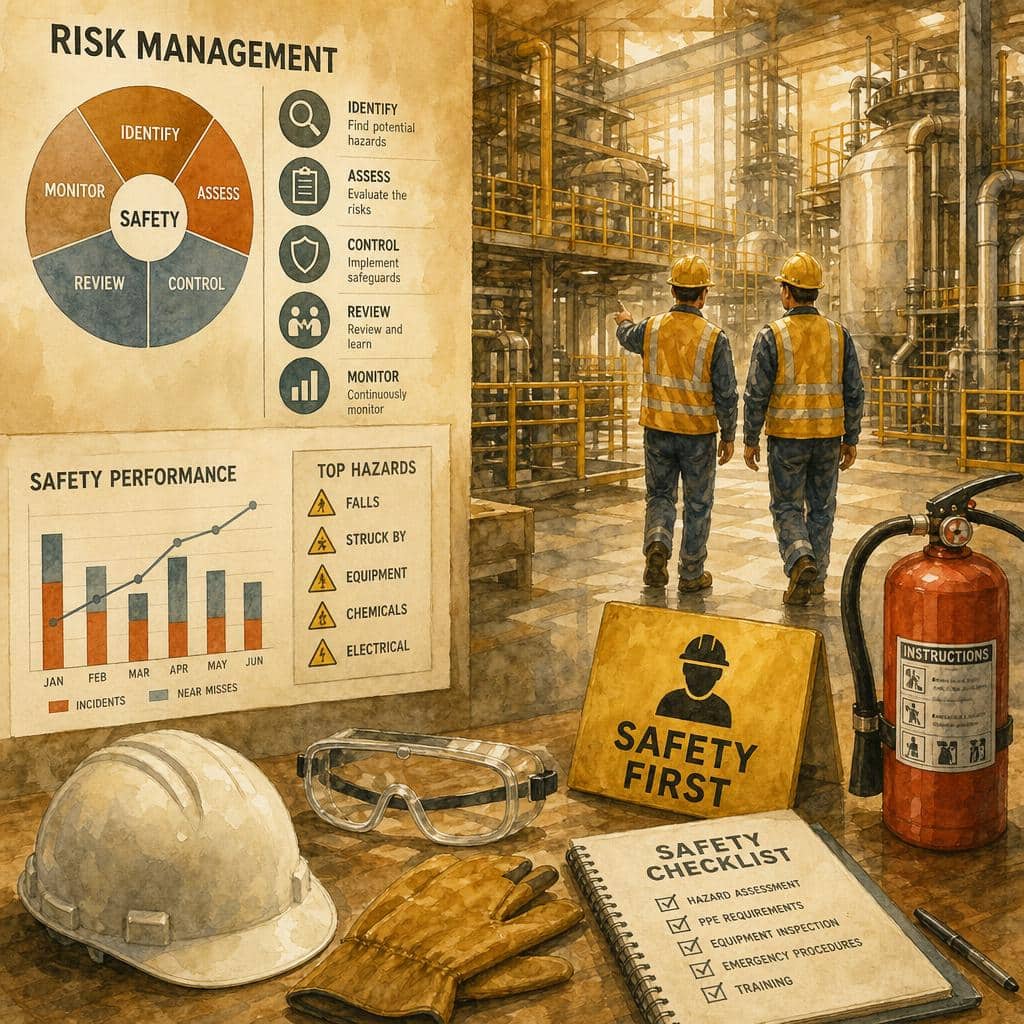
The 7 Stones Safety System

Field-tested safety and risk management tools mapped directly to OSHA’s Recommended Practices for Safety and Health Programs.

Our 7-Step Risk Management Process

01

Management Leadership

Top management makes safety a stated core value, invests in program development, aligns incentives, and leads by example.

02

Worker Participation

Employees are actively involved in designing, implementing, and monitoring the safety program. Barriers to transparency and accurate reporting are removed.

03

Hazard ID & Assessment

Proactively identify, analyze, and document hazards using tools like job hazard analysis. Changes to personnel, equipment, materials, processes or facilities are actively monitored and addressed.

04

Prevention & Control

Decide and implement the best method for eliminating, controlling, or preventing identified hazards. Use root cause and corrective action to eliminate or reduce hazards at the source.

05

Education & Training

Role-specific training, so every worker can identify the hazards of their specific job and consistently execute controls, instead of just acknowledging written procedures.

06

Evaluation & Improvement

Regularly audit and evaluate system effectiveness to identify gaps and drive improvement. Measure what matters, so you can spot and act on trends before they become incidents.

07

Communicate & Coordinate

Communicate safety expectations and site-specific hazards with all parties prior to commencing work — everyone on site under the same program.

The Quarry.

Join our group for free access to safety professionals

Live webinars, in-person roundtables, and social events with former OSHA staff and safety leaders from $100M+ construction and manufacturing companies.

  • This field is for validation purposes and should be left unchanged.
    Secret Link